

Write all of the introduction content here. Only use NON
FULL-WIDTH block.
Full-Width blocks can be inserted
outside of this block and will wrap around the form. Form settings are located on page settings
(click
“Program” for page
settings in
right-hand sidebar.)
Write your contact information here and insert your embed form code in the Custom HTML block below
Discover Life’s Smallest Forms
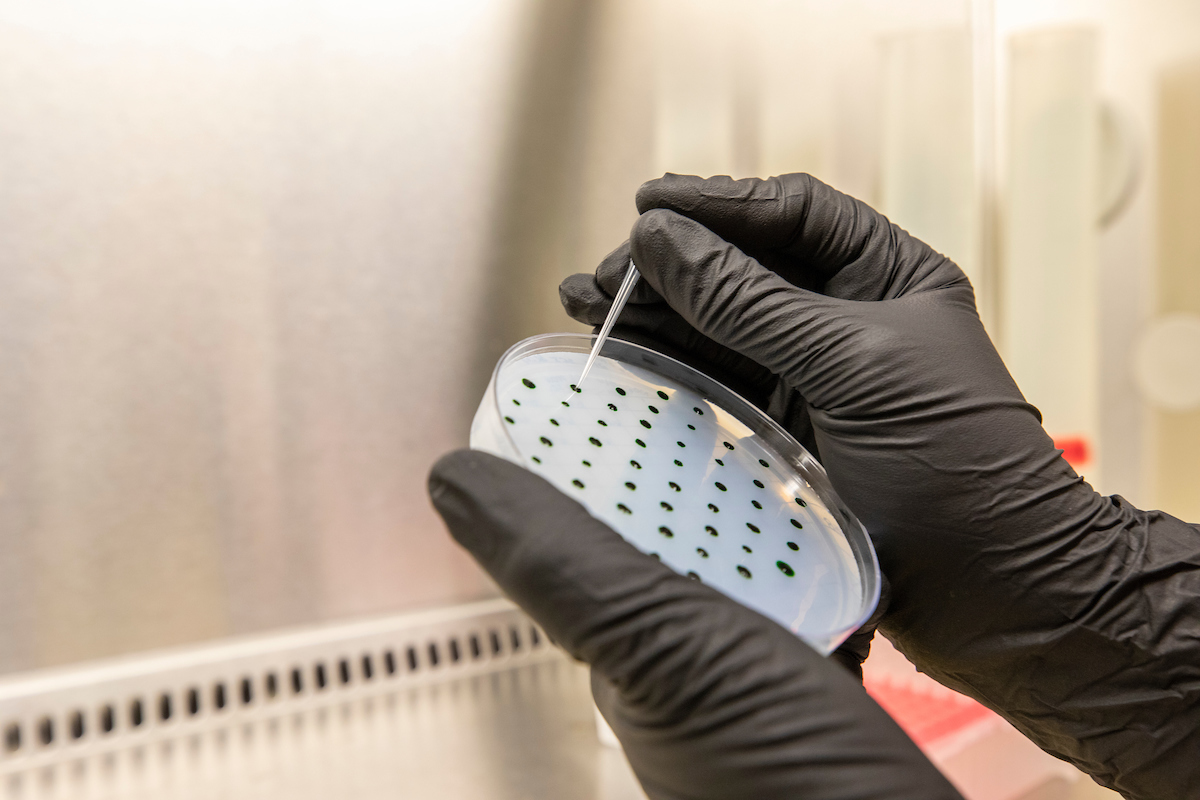
The Microbiology B.A. and B.S. programs at Miami University explore some of the smallest and most impactful forms of life, including bacteria, molds, and viruses. Students study how microorganisms influence human health, medicine, biotechnology, and the environment.
In this program, you will investigate critical global challenges such as antibiotic resistance, microbial solutions for toxic waste cleanup, and vaccine development. Through hands-on laboratory experience and research opportunities, you will build the scientific skills needed to understand and control microorganisms.
Graduates are prepared for entry-level microbiology careers, medical and other pre-professional programs, and advanced graduate study in microbiology, biomedical sciences, and related fields.
Curriculum and Courses
The program in microbiology includes courses in general microbiology, pathogenic (disease-related) microbiology, immunology (dealing with immunity to disease), microbial ecology (environmentally related microbiology), virology, genetics (including recombinant DNA technology), microbial physiology, bioinformatics, chemistry, mathematics, and physics. Laboratories are an essential part of the science courses.
Combined Microbiology B.S./M.S. Degree Program
The combined bachelor’s–master’s program lets highly qualified students pursue both the Microbiology, B.S. and the Microbiology M.S. degrees concurrently. Students interested in this option should consult the program’s graduate director early, as it requires advance planning.

I never knew that research was an option for undergraduates, until I found out about the high level of undergraduate students involved in some form of undergraduate research program at Miami.
Miah King, ’27
Research Opportunities
Microbiology faculty are conducting research on microbial pathogenesis, environmental microbiology, molecular microbiology, and more.
Both undergraduate and graduate students may get involved in laboratory research as well, including within Miami’s research facilities:
Careers in Microbiology
Students receiving degrees in Microbiology, Medical Laboratory Science, or Public Health are well-prepared for careers in almost any field in medicine and biology, and in every sector of the economy: universities and colleges, schools, hospitals, government agencies, Congress, industry, business, and communications.
These degrees also serve as an excellent stepping stone to medical school and align well with the Premedical Studies co-major.
Career Paths include:
- Infectious Disease
- Technical Sales
- Medical Illustration
- Genetic Engineering
- Scientific Research
- Clinical Microbiology
- Drug Development
- Patent Law
- Bioremediation
- Education
- Public health
- Pollution control
- Immunology
- Quality Control
- Food Technology
- Molecular Biology
- Vaccine Development
- Environmental Health
- Technical Writing
- Bioweapons Defense

In preparation for medical school, Rebecca conducted research, participated in a medical education club, and job-shadowed a physician through a program sponsored by Miami’s Mallory-Wilson Center for Heathcare Education.
Rebecca Wyma ’18
Facts and Stats
Your college experience here will be one of the most exciting times of your life. To make sure of this, we’ll provide you with a powerful support system.
Contact Us
Undergraduate Admission
513-529-2531
[email protected]
Department of Microbiology
Becky Balish, Ph.D.
Lead Departmental Advisor
Pearson Hall 60
700 E. High St.
Oxford, OH 45056
[email protected]
513-529-1661